Accountability Voids: How Enterprise Restructuring Leaves Decision Authority Without a Home

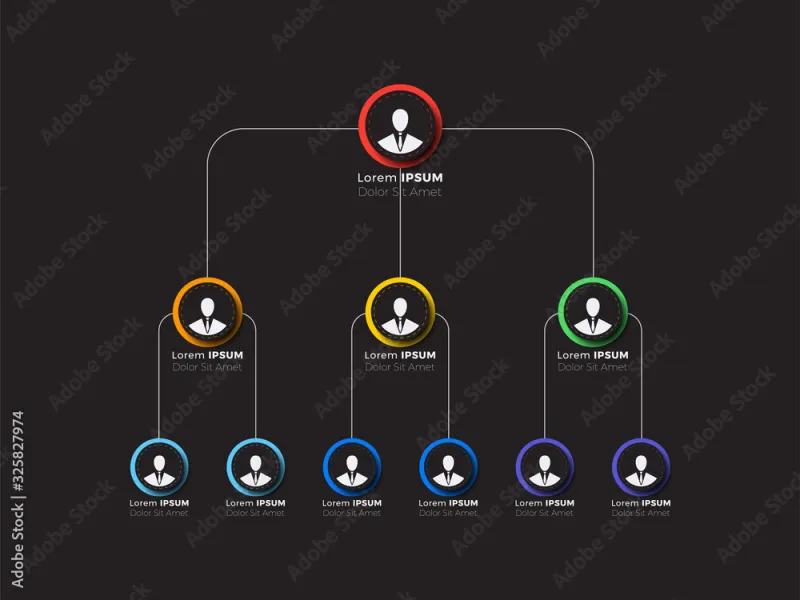
Reorganizations are sold internally as instruments of precision. Leadership teams announce them with diagrams, timelines, and language about alignment. The promise is almost always the same: cleaner lines of authority, faster decisions, and organizations that can respond to market conditions without bureaucratic friction. What those announcements rarely acknowledge is the period that follows—weeks or months during which nobody is entirely certain who owns what, and the enterprise quietly absorbs the cost of that uncertainty.
For large US enterprises, the gap between a reorganization's announcement and its operational reality is not a minor inconvenience. It is a measurable drag on execution velocity, stakeholder confidence, and competitive responsiveness. Understanding why this gap forms—and why it persists far longer than leadership typically anticipates—requires examining what actually happens to decision authority during structural transitions.
The Structural Limbo Problem
When an enterprise redraws its organizational chart, formal reporting lines shift on paper before they shift in practice. Employees who previously escalated decisions to one executive suddenly face ambiguity about whether that executive still holds relevant authority. New leaders inherit teams they do not yet fully understand. Cross-functional processes that were calibrated to the previous structure continue operating on institutional memory rather than updated governance.
The result is a condition that organizational theorists sometimes call structural limbo: a state in which decision rights exist in theory but cannot be exercised in practice because the human networks, trust relationships, and informal authority channels that make those rights functional have not yet been rebuilt. In this state, decisions do not disappear—they migrate. They move into informal channels, get deferred to committees, or simply stall at department boundaries where nobody wants to claim ownership of an outcome that might carry political risk.
In a 2023 survey of US-based enterprise executives conducted by a major management consulting firm, nearly 68 percent reported that post-reorganization decision velocity declined measurably in the twelve months following a major structural change. More strikingly, 41 percent acknowledged that critical strategic decisions were delayed by more than ninety days specifically because accountability ownership was unclear.
Where Accountability Goes During a Restructuring
The mechanics of accountability migration are rarely visible to senior leadership until the downstream effects become undeniable. Three patterns emerge consistently across enterprise restructurings.
The Orphaned Process. When departments are merged, split, or reassigned, operational processes that crossed the old boundary lines frequently lose their sponsorship. A procurement approval workflow that previously involved two departments may now technically belong to a newly formed shared services unit—but that unit's leadership has not yet been briefed on the process, does not consider it a priority, and has no incentive to claim it. The process continues to function, but without a defined owner capable of making exceptions, resolving escalations, or authorizing improvements.
The Competing Claimant. In other cases, restructuring creates situations where two or more leaders believe they hold authority over the same domain. This is particularly common when organizations move from functional to matrix structures, or when business unit consolidations create overlapping mandates. Competing claimants rarely resolve their disputes through direct confrontation. Instead, they route decisions around each other, build parallel approval chains, and create the kind of organizational redundancy that erodes efficiency long after the restructuring is officially declared complete.
The Informal Successor. Perhaps the most consequential pattern involves the emergence of informal authority figures who fill the vacuum left by structural ambiguity. These individuals—often senior individual contributors or mid-level managers with strong internal networks—begin making decisions that fall within the accountability void, not because they have been designated to do so, but because someone has to. Their decisions frequently reflect sound judgment and institutional knowledge. But their informal authority is inherently fragile: it depends on personal relationships, operates outside governance frameworks, and creates single points of failure that compound the enterprise's organizational risk.
The Execution Cost Is Quantifiable
Organizations that have attempted to measure the operational impact of post-restructuring accountability voids have found the numbers difficult to dismiss. A technology company in the Pacific Northwest that underwent a major divisional restructuring in 2022 documented a 34 percent increase in project milestone delays during the eighteen months following the reorganization, tracing the majority of those delays to cross-functional decision points where ownership was disputed or absent. A financial services firm in the Midwest reported that stakeholder satisfaction scores among internal clients dropped by 22 percentage points in the year following a shared services consolidation, with the dominant complaint being that nobody could identify the right person to resolve service issues.
These figures are not anomalies. They reflect a structural reality that most enterprise leaders underestimate when designing reorganizations: the formal chart is only one layer of the decision architecture. The informal layer—the relationships, norms, and trust networks that enable the formal structure to function—cannot be redrawn in a single announcement. It must be rebuilt through deliberate effort, and that effort takes time that most reorganization timelines do not budget for.
Building Reorganizations That Preserve Decision Velocity
The enterprises that navigate structural transitions most successfully tend to approach them as two-phase initiatives rather than single events. The first phase addresses formal structure: reporting lines, role definitions, and governance frameworks. The second phase—often underinvested—addresses operational continuity: explicitly mapping decision rights to new structures, identifying accountability voids before they become operational crises, and creating temporary bridging mechanisms that preserve decision velocity while informal authority networks are rebuilt.
Several practical disciplines have proven effective in reducing the duration and cost of structural limbo.
Decision rights audits conducted prior to announcement. Before any restructuring is communicated, a systematic inventory of cross-functional decision points—particularly those that span the boundaries being redrawn—allows leadership to identify orphaned processes and competing claimant risks in advance rather than after the fact.
Explicit interim ownership designations. For any decision domain that will be affected by the restructuring, naming an interim owner with defined authority for a specified period prevents the vacuum that drives informal succession. Interim ownership is not a permanent solution, but it preserves execution velocity during the transition period.
Accountability mapping as a governance artifact. Treating the mapping of decision rights as a formal governance document—subject to the same rigor as the organizational chart itself—elevates it from an afterthought to a strategic asset. Organizations that maintain living decision rights inventories report faster recovery from structural transitions and lower rates of decision stalling at department boundaries.
The Strategic Imperative
Reorganizations will remain a necessary tool for enterprises navigating market shifts, competitive pressures, and operational scale challenges. The question is not whether to restructure, but whether to do so with sufficient discipline to prevent the accountability voids that consistently undermine the efficiency gains those restructurings are designed to deliver.
For enterprise leadership teams, the cost of ignoring this discipline is not abstract. It is measured in delayed decisions, frustrated stakeholders, and the slow erosion of execution capability that compounds with each successive reorganization. Building the organizational infrastructure to support structural transitions is not an administrative detail. It is a strategic investment with a measurable return.