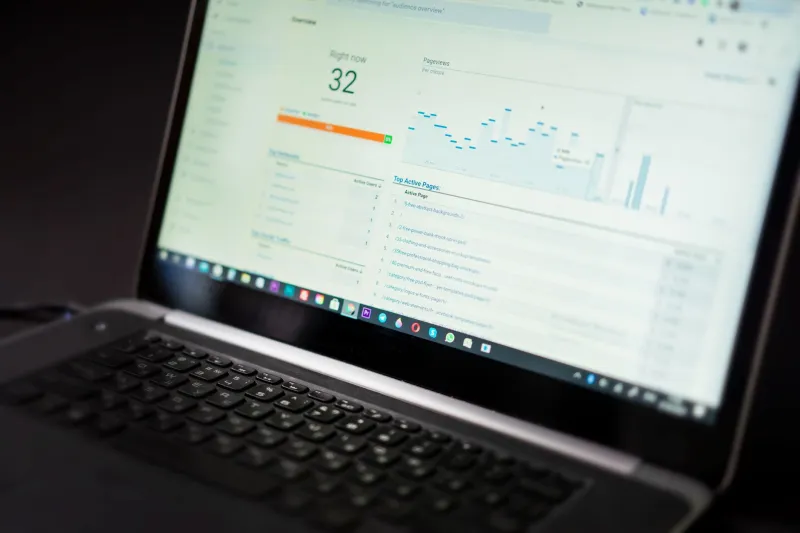
Measured but Mismanaged: Why Enterprise Dashboards Are Hiding the Operational Crises They Were Built to Prevent

When More Data Produces Less Clarity
Enterprise technology investment over the past decade has been defined, in large part, by a belief that visibility solves problems. Deploy the right business intelligence platform, connect your data sources, build the right dashboards, and leadership will finally have the clarity it needs to manage operations with precision. The premise is compelling. The execution, in practice, frequently produces something far more dangerous than ignorance: the confident illusion of control.
Across industries, organizations have discovered—often at considerable cost—that their dashboards were not showing them what was happening. They were showing them what was being measured. These are not the same thing, and treating them as equivalent is how enterprises arrive at board-level surprises: a supply chain disruption that had been quietly building for months, a customer retention problem invisible until the renewal cycle, a compliance exposure that no automated alert ever flagged.
The distinction matters enormously. A dashboard that reports green across every tracked metric while operations deteriorate in unmeasured areas is not a management tool. It is a false floor.
The Instrumentation Bias Problem
Business intelligence systems are, by design, constrained to what they can measure. This sounds obvious, but its implications are routinely underestimated in enterprise environments. The metrics that populate most executive dashboards were not selected through a rigorous analysis of what drives enterprise value. They were selected because the data existed, because the integration was technically feasible, or because a previous reporting structure had already established them as defaults.
This creates what might be called instrumentation bias: the tendency for organizations to manage toward what is visible rather than toward what is important. Over time, teams optimize for the metrics that leadership monitors. Processes that fall outside the dashboard's scope receive less attention, less investment, and less accountability—not because they are unimportant, but because they are untracked.
The result is a gradual divergence between monitored performance and actual operational health. The dashboard continues to report satisfactory numbers. The underlying business continues to develop problems that those numbers were never designed to detect.
Why Critical Failures Remain Invisible Until They Aren't
The enterprises most susceptible to this dynamic are often those with the most sophisticated reporting infrastructure. Paradoxically, an abundance of dashboards can create a false sense of comprehensive oversight, discouraging the kind of direct operational inquiry that might surface anomalies no metric was designed to capture.
Consider how operational drift typically unfolds. A process degrades gradually—vendor performance slips, a workflow bottleneck emerges, informal workarounds proliferate across teams. None of these developments trigger an alert because none of them cross a threshold in a monitored system. The individuals closest to the work are aware of the deterioration, but there is no formal channel through which that awareness reaches leadership. The dashboard, meanwhile, continues to report on the metrics it was built to track.
By the time the problem surfaces in a way that registers on existing instrumentation—through a financial impact, a customer complaint, or an operational failure—it has typically been developing for months. The visibility apparatus that was supposed to enable early intervention instead provided the organizational comfort that delayed it.
The Difference Between a Metric and an Outcome
Enterprise leaders who have worked through this failure mode often describe the same realization: their organizations had become extraordinarily proficient at reporting on activity while losing sight of results. Metrics multiplied. Outcome clarity diminished.
This is not a technology problem. It is a governance problem that technology has made easier to ignore. Business intelligence platforms do not determine what matters to an enterprise; they amplify whatever the organization has already decided to measure. If the measurement framework is misaligned with actual value drivers, deploying more sophisticated analytics infrastructure will not correct the misalignment. It will make it more elaborately visible.
The practical implication is that dashboard governance—the ongoing discipline of evaluating whether tracked metrics remain connected to the outcomes that drive enterprise performance—deserves the same rigor as the underlying technology investment. Most organizations treat this as a configuration decision made at deployment and rarely revisited. The metrics that made sense three years ago may no longer reflect how the business creates or destroys value today.
Distinguishing Monitoring from Management
Addressing this challenge requires a deliberate separation of two activities that enterprise organizations routinely conflate. Monitoring is the automated, continuous tracking of defined metrics. Management is the application of judgment, accountability, and intervention to influence outcomes. Dashboards support the former. They do not substitute for the latter.
Organizations that manage effectively through data tend to share a few structural characteristics. First, they maintain explicit accountability for outcomes rather than metrics—meaning that a business unit leader is responsible for customer retention, not for the score on a customer satisfaction survey. Second, they build systematic mechanisms for surfacing qualitative operational intelligence that falls outside automated reporting: structured leadership walkthroughs, cross-functional operational reviews, and direct channels for frontline insight to reach decision-makers. Third, they treat metric relevance as a recurring governance question rather than a one-time configuration choice.
None of this diminishes the value of well-constructed business intelligence infrastructure. The capacity to track performance at scale, identify statistical patterns, and distribute consistent reporting across a large organization represents genuine operational capability. The error is in treating that capability as sufficient rather than as one component of a broader management system.
Recalibrating the Intelligence Function
For enterprises that recognize this dynamic in their own operations, the corrective work is less technical than it is organizational. The question is not which platform to deploy or which additional metrics to add. The question is whether the existing measurement framework is actually connected to the decisions that determine enterprise outcomes—and whether leadership has built the habits and structures to act on what the data reveals rather than simply to report it.
Enterprise dashboards, at their best, are instruments of accountability. They create shared visibility into performance and establish a common basis for operational conversation. When they function as the primary interface between leadership and operations—when the dashboard becomes the substitute for direct operational engagement rather than its complement—they introduce exactly the kind of managed distance that allows problems to compound undetected.
The enterprises that navigate this most effectively are those that treat their intelligence infrastructure as a starting point for operational inquiry rather than an endpoint. The dashboard tells you what has been measured. Determining whether that measurement reflects what actually matters remains, and will likely always remain, a fundamentally human responsibility.